
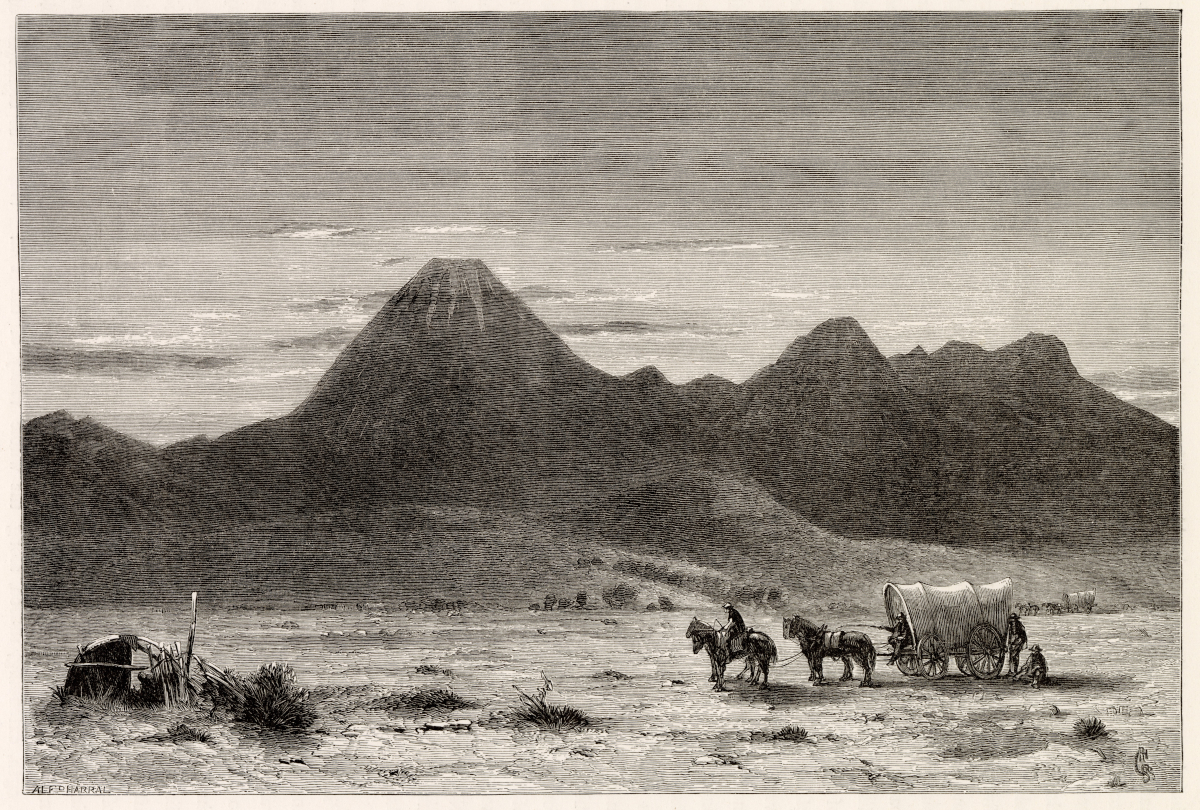
Now that I am safely returned to my Christian brethren in the civilized city of Denver, Colorado, at the foot of the majestic Rocky Mountains, themselves proof of God’s benevolence, I feel compelled to set down an account of my time with the native savages of these western lands. My tale will not be the first, nor the last, as many of us righteous Christian men have found conflict with the local tribes when pushing into the frontiers of the West. However, you will see that my story differs in that its descriptions of the native peoples are more peculiar than the observations offered by others. I can only account for this by way of saying there are numerous and varied tribes in the West, and from what I can ascertain, I am the only one to have encountered this particular group.
It is right and natural that we explore our territories to the best of our abilities, and it is also only natural that enterprising men seek fortune by way of the gold locked in these mountains, plowed and cultivated fields, or heads of cattle. Nonetheless, even today, finding one’s place in the world can be a dangerous endeavor, and that was certainly the case for me when I headed west as part of a wagon train in 1847, a few years after the Mormon War.
Though from Ohio, the descendant of proud, freedom-loving Quaker folk, I made my living trapping in the bountiful forests along the Mississippi River. Being as the river served as a transportation and trading thoroughfare, I found that when ready to sell my furs, I could do so easily and at a handsome profit. This proved fruitful and sustained me for several years.
Nonetheless, I started to feel I had conquered much of the mystery of that region and dreamt of seeing the red rocks of the West and the mighty Colorado River. So much of the Western territories had been nary explored by white, English-speaking Christian men, and I, for one, wanted to see the full abundance of our young nation.
During the course of my trading, I heard tale of a group of Mormons gathering in Illinois for an exodus to the West not unlike the exodus made by the Jews upon leaving Egypt. Missouri men had not looked kindly upon the Mormon zealots and had killed off a good number of their menfolk in a series of violent aggravations. Some now sought refuge in the West and required hired guides for their treacherous journey.
I harbored no ill will toward the Mormons, and I did not condone the violence perpetrated against them in Missouri. Though their form of worship appeared strange to some, they only wanted a plot of land where they could partake in an industriousness that would please God. I saw no reason why, in the spirit of our new country, they should not have exactly that. The handsome payment promised in return for my work gave me further reason to think well of these God-fearing people.
I signed a contract of employ but was under no illusions that this migration would be without its trials. We were going through the heart of Indian territory, and I had heard many tales about the savagery imposed upon Christian men traveling west. Still, I considered the risk preferable to continuing my solitary pursuit of muskrats, badgers, and foxes. Little did I know that the kind of Indians I would find would be so dissimilar to the ones I’d read about in the newspapers and dime novels. If I had known then what I know now, I should have been content along the banks of that fine river and to have let that be the furthest west I ever ventured.
We made haste under the vast open skies and prairies in a caravan of twenty wagons, a good deal of cattle, and sixty or so Mormon pioneers. I rode on horseback, rifle in tow, with my eyes scanning distant horizons for any indication of unrest. While the Mormons considered the Indians a chosen people and innately righteous, they paid me to exercise greater caution.
Among the previously persecuted and downtrodden Mormon band, there emerged new hope, and they talked of paradise in Utah. As hardship and sickness inevitably came, they proclaimed such trials to be divine tests of faith that, when overcome, would end in their deliverance. They repeated this sentiment often, especially during funeral rites, as if saying it helped them believe it true.
While traveling with these people, I witnessed several practices to which I was not accustomed. For one, group prayer erupted without provocation on the trail, a song sung from wagon to wagon. Also, while I knew it to be Mormon practice for men to take on more than one wife, it was nonetheless a shock to see with my own eyes as children scurried about the heels of what appeared to be a group of several mothers. I reminded myself that this group had lost a good number of men in skirmishes East and there were but few men to provide and care for the remaining women and children. In retrospect, it seems foolish to have fretted about these petty differences given the ghastly society of men with which I would soon come into contact.
There was within the Bennett family a particularly precocious youth with bright yellow hair and a penchant for running, jumping, and climbing with an exuberance his difficult circumstances had yet been able to quash. The Bennett boy liked to scamper about, weaving between horses, cattle, and wagons as we made our way. Often, he’d look up at me on my mount, and bombard me with questions about my time in the wilderness. I quite liked the boy, in large part because of his unruly behavior, and it was perhaps because of my fondness that I felt an additional responsibility for what would happen to him. If I had not made certain allowances in his case, I might have avoided my own formative and dreadful ordeal.
Sundays were days of rest, and we did not travel. Church services of a sort were held in a makeshift chapel formed by arranging wagons in a circle. The congregants would huddle together facing a leader who would perform the necessary orations and prayers. Afterward, it was customary to prepare a large supper. Womenfolk did their best to augment meager rations with the bounty of the surrounding landscape, and menfolk hunted game. I did not think it prudent to partake in morning worship, as I was just a hired man. However, I did very much delight in the celebration of cookery that took place afterward and did my part to support it.
While women worked fireside, the men spread out in search of game, and children, when free of duties of their own, ran about. I rode horseback and did my best to account for all members of the group, still vigilant of danger even on this day of rest.
It was on such a Sunday that the Bennett boy set out looking for buffalo chips to stoke the fire. Though I suspected his stated purpose was a ruse for exploration, I respected and shared his sense of wonder and adventure, and perhaps because of that, I allowed him to extend too far. This error in judgment no doubt led to my own strife for it is my supposition that without the intrusion of the Bennett boy, the devilish Indian tribe would not have had reason to molest me or our group.
As it so happened, the Bennett boy came running over a grassy knoll with eyes as wide as the buffalo chips he was said to have been collecting. I dismounted and grabbed the youth by his shoulders and implored him to recount what had given him such a powerful scare. He squirmed in my arms, unable to speak, and looked back in the direction from which he had run. It was at that point I knew I would not get a proper retelling from the boy until I could deliver him a good distance from whatever danger he perceived. I pulled him up in my saddle and rode him into camp. There, with Mr. Bennett at my side and several womenfolk, young Bennett relayed his encounter with the natives.
As he came over the knoll, there had been a group of Indians standing together and looking at him directly as if they had been waiting for him to arrive. Young Bennett could not recall whether the Indians had been men or women. I found this odd because, in his telling, they were all without clothes. He described them as tall, horse-head high, with large eyes and heads, and skin of an uncanny grey and green color not unlike a salamander.
I asked the boy about their hair, knowing that the Pawnee often wore theirs in spiky tufts, and that both male and female Lakota wore theirs long, sometimes in braids. However, Bennett insisted these Indians had no hair at all, their heads smooth and gleaming, lacking even eyebrows.
After we listened to all young Bennett had to say, Mr. Bennett then offered the boy a chunk of tack biscuit and sent him off to the comfort of the women. Then, looking at me, Mr. Bennett told me in no uncertain terms I must investigate the boy’s reportage for the safety of the caravan. He did not have to say so, but I sensed, he was displeased I had allowed his son to stray so far. I agreed to my assigned duty as this seemed the prudent course of action, and I set off back in the direction of where I had encountered the frightened youth.
While afternoon twilight in the vast open plains could be majestic, it was distinctly disadvantageous for me as I searched for the salamander-skinned Indians. Furthermore, with darkness came a bitter cold that presented in the evenings in the openness of the West. I rode for some time but did not catch sight of the Indians of which young Bennett had told, and I began to harbor some skepticism as to the validity of the boy’s tale. With stories of Indian savages retold at every outpost, and even printed and sold for distribution, it wasn’t uncommon for skittish travelers to mistake a wind-blown tree for the sudden movement of a lurking assailant or for a distant herd of jumping deer to become a brigade of Indian warriors.
Nonetheless, in performing my duties, it was necessary to keep my eyes keen and my rifle at the ready. Little did I know that keenness would not be necessary as there was no subtlety in the manner in which the Indians announced themselves to me.
While, reader, you may very well be a connoisseur of adventure tales of this sort or even stories of captivity at the hands of Indians, it is here that I ask you for some latitude, as what I am next to describe will no doubt deviate with some significance from what may be familiar. I assure you that my reportage is true and accurate to the best of my abilities and has not been augmented for the sake of sensation. My story is recorded here in the hopes of setting down a true account so that others may be warned and wary of the looming menace lurking in the American West.
As I rode on, the sky became ominously black aside from the twinkling of stars. I listened to the rustling of the wind over the grasses and brush and peered into the distant forest, watching the subtle sway of the trees. I felt monumentally alone in the quiet, and this no doubt made what I saw next even more shocking and sinister.
A bright, vibrant light shone down from above in a rainbow of rich colors and hues. A low hum erupted from all around. The noise came from the light source itself, but it seemed the whole sky vibrated around me. At the center of this bright light appeared a craft, smooth and rounded as if I were looking up at the underside of a boat hull, its exterior as shiny as a new nickel. The craft paused above me, lights flashing and dancing about on the ground, and I could only look up in paralyzed awe. My horse, on the other hand, reacted to this fright by promptly bucking me off and making haste for the distant horizon. I lay on the dirt, propped on an elbow as I watched my horse disappear into the distance with swirling lights all about. That is the last thing I remember before waking in their encampment.
I came to on my back, splayed out on a slab of rock encircled by a number of Indians similar in appearance to those described by young Bennett. They had the same large eyes and salamander skin the boy had recounted and looked at me with a perplexity I can only imagine I mirrored back at them. Though the Indians were naked, I could not discern whether they were men or women, as their pubis regions were a rounded mound of an indeterminate nature. Aside from their large heads, they appeared thin and stretched with slender limbs and elongated fingers and toes.
I had read about Indians of odd appearance ranging from the tattooed faces of the Iroquois and Cree, to Pawnee with roaches made of porcupine quills, to the tall Comanche men on horseback with pierced ears and feathered spears. You can imagine my heightened state of terror as I ran through all of what I knew and found this tribe unlike anything relayed to me before.
Beyond the Indians, steep rock faces and the starry night sky helped me understand myself to be in the depths of some remote canyon, a distance from the caravan I had left in the grasslands. Though free of any kind of shackles or bindings, when I tried to sit up, I could not move.
Three of the Indians approached me and removed my boots. When they did, their large eyes grew even larger, and I believe that for a brief instant, they feared they had accidentally performed a dismemberment. They examined both the boots and my feet carefully and with alarm for some time. One of these Indians thinner and more slight than the rest, wore a silver amulet inlaid with turquoise, and he looked at me with what I perceived to be a modicum of compassion. His necklace made me consider if perhaps he were Navajo, that maybe the group had transported me that far west. However, while Navajo affiliation would explain the turquoise necklace, it would have done little to explain other peculiarities.
The group of Indians inspected every hair, orifice, and protrusion of bone, tendon, and flesh on my body. I do not mention this to be salacious, for if that were the case, I could certainly provide more details about their poking, prodding, and lingering. However, their curiosity about my body shows how different they found my anatomy from that of themselves and gives weight to my previous descriptions of their odd appearance.
For several days I existed in a state between wake and sleep, and I am unsure if this was because of the shock I had suffered, some elixir fed to me by my captors, or a combination of the two. I was often fed a milky substance, and I wondered if it might have some opium mixed in that kept me drowsy and confused. Regardless, it was the only form of sustenance offered to me for several days, so I partook of it eagerly. Because of my confused state, it was difficult to gauge the passage of time. However, slowly, I gained strength and was incorporated into the more regular aspects of their daily life.
While it would not have surprised me to hear them talk in a foreign tongue, they did not talk, and the village lay in an eerie silence. Between them, there were only gestures and meaningful gazes, and I suspected they could transfer thoughts between themselves without speaking. This was the only explanation for certain eruptions of group action that appeared spontaneous to me. How I longed for someone to break this unnerving silence with the beat of a drum or with jibber in some foreign tongue!
Their campfires erupted from the dirt rather than being constructed from brambles or buffalo chips, and the flames were of a rainbow hue and smelled of water and berries rather than ash. One common meal was a porridge of ground insects, and they ate it directly from clay bowls, flicking long tongues in and out like lizards to lap up the last bits. I was reduced to eating this dish as well and used my hands for want of a spoon. Once, after I’d had my usual serving, the tribesman with the necklace, sensing my ravenousness, doubled back and provided me with more. I rarely saw children, and when I did, the adults chased them away quickly, as if my presence were unseemly.
Days passed, and I was thankful to be incorporated into the mundanity of their daily life and to realize I was not in immediate danger. This is not to say I grew comfortable with this ghastly crew. Their silence and nakedness were indications of their savagery, of a people living too close to the earth, not yet able to elevate their civilization above the wilderness around them. Their bulbous heads and elongated limbs and digits made them appear a feral and sickly crew born from the devil himself.
Though nomadic, the tribe did not keep horses and instead traveled using their peculiar sky ship. Whenever we moved, I would lose consciousness and awake confused and in a foreign locale, making transport both magical and terrifying. I can only assume the Indians themselves retained their full faculties when they traveled because they did so often and seemingly without concerns.
It was after such a mode of transport that I came to be standing in a field with several of my captors, including the one with the necklace, amidst a sea of downed buffalo. We walked among the fallen beasts, and the wind blew the grasses to and fro and ruffled furry hides. I was no stranger to the practice of harvesting animals for the benefit of their pelts, meat, and other valuables. Nonetheless, the amount of death laid out before me exceeded what any village or group might need, and the gratuitous takings struck me as obscene and beyond God’s will. The animals had been carved and dissected with clean, precision cuts, sometimes slicing through bone or bisecting a skull. No blood pooled underneath them on the soil or clung to matted fur, and it was as if the beasts had been drained of blood before being cut. I moved from one animal to the next, examining these anomalies. My captors watched me, peering with their enlarged eyes, tilting their curious heads, no doubt recording my shock and disgust.
I consider myself a man of great fortitude. I have conquered the wilderness of the Mississippi region and lived much of my life in rugged conditions away from the comforts of civilization or the assistance of other men. However, and perhaps it was because of the accumulation of the affronts afforded to me, after examination of these mangled buffalo, I felt acutely helpless and subject to the depraved whims of my inhumane captors. Falling to my knees, I cried hard and tears fell down my cheeks onto the dry earth beneath me. The Indian with the necklace pointed a knobby finger at me, and it must have been then that I was transported back on that great glowing ship, though I do not remember it.
At the campsite, several Indians stood bent over a table covered with the bone and flesh of the slaughtered buffalo. The Indians prodded and poked using a variety of metallic instruments in a way that appeared careful and scientific. The buffalo slaughter then had been some kind of experiment, and I counted myself fortunate that their examination of my body had left me with all of my flesh and bones intact.
Over the next several days (weeks?) I saw the Indians study other animals, plants, and soil with similar care. I would have expected these Indians to be intimately familiar with their local flora and fauna as was the case with most of the western tribes. From time to time I noticed a small triangle of raised dots on my kneecap, wrist, or neck too precise to have come from a scrape or nick in the wilderness. It is my presumption that the Indians had continued to study me as well during my flights from consciousness, the red bumps being the result of small incisions from their metallic instruments. I started to think that their sky vessel may have transported these Indians from a distance quite far away, maybe from an area with a climate significantly varied from the arid desert landscape we now occupied.
It was difficult for me to discern how much time I had spent with the Indians. There were many trips aboard the vessel that put us in the vicinity of a variety of animals or human travelers which the Indians then studied. At times, I woke up wondering if I had slept through the night or through several days or even weeks. I noticed seasonal changes, but I can not recall how many. Some might claim this murky memory brings doubt upon the account of my captivity, but I can assure you many details remain remarkably clear and cogent. Only the passage of time remains elusive and slippery. I did know I had been away from white men for some time, and I considered running away. However, with no horse, supplies, and no clear idea as to where I was located, I depended upon my captors for survival.
In time, I noticed the Indians did not watch me with the same attention or interest they had shown previously. Red dots appeared on my skin infrequently, and days passed with logical progression, and I had fewer gaps in my memory. My novelty, I presumed, had expired, and while on the one hand, this gave me reason for relief, I conversely feared I would end up dead and discarded like a buffalo carcass.
I have claimed before to be of Christian faith, and while I do my best to serve God’s will, my shortcomings are plentiful. I don’t wear my devotion as openly as the Mormon tribe with which I had traveled, and neither is my faith as unyielding. In my darkest times with the Indians, I had the audacity to question the hardships God had heaped upon me. I begged for His mercy. Only after some time did I finally stop asking God for relief or justification for my dire circumstances. Once resigned to my fate, I accepted my isolation and loneliness and found the divine in smaller things: the moths fluttering above the rainbow-colored fire, a quick rain tamping down desert dust, or a sprawling sunset pink against the hillside. It was only when I fully relinquished myself to His will that God saw fit to release me from captivity.
I was dropped from the vessel for the first time into the midst of a densely populated city without any of my captors to observe me. Through the signage on the inn and the dry goods store, I was able to discern I was in Denver with all of the majesty and commotion of that burgeoning metropolis. Wagons and horses bustled about, and I even saw two ladies in finery walking arm in arm down the promenade. It had been many years since I’d seen such civility, and the sight of it was nearly as foreign to me as my first glimpse of the Indian camp. I reveled in all that I saw and heard: the pounding hammer of the blacksmith shop, the rattling stagecoach, the men gabbing outside the hardware store, and even the sound of a crying baby in its mother's arms. While these things may seem commonplace, and they are to me now, at that time, they made a glorious symphony.
I anticipated I would have but a short time in Denver as I assumed my captors were observing me from someplace unseen and would soon pull me away again. However, the afternoon sun began to wane, and I was still in Denver. I grew hungry and even longed for a bowl of the insect-laden mush served to me so often at the Indian camp. The sky grew dark and stars appeared overhead. I thought it best to sit for a spell and rest my eyes, and I did along the promenade outside a storefront. As will happen in the West, the night brought a chill to the air, and I pulled up the collar of my jacket and shoved my hands deep in my pockets.
It was then that I discovered an unfamiliar satchel. I felt something hard inside as if I were carrying a bag of rocks. I removed the satchel from my pocket, opened it, and poured the contents into my hand. I held several nuggets of gold of a significant size as well as the silver and turquoise necklace previously worn by the thin tribesman. Looking from left to right, up and down the street, I saw no one with whom to share my joy and excitement, only a few horses tied up and a loose chicken skittering about. It was at this moment I thought it possible my captors had set me free and sent me on my way among my brethren. I couldn’t sleep and only sat there gripping my riches and waiting for morning and a new life in Denver, Colorado.
Not everyone is granted a second chance at life, and I thank God for mine daily and seek to please Him in my deeds and actions henceforth. While I am free from my captors, I have not forgotten how suddenly I had been removed from all I knew. I do not sleep easy, nor do I piddle away the glory of each new day.
Those gold nuggets were perhaps a hint as to what was to come in Denver, and maybe the Indians knew it. Soon, the hills proved rich with gold, and I made a decent living both as a prospector and a guide.
I did send word to Salt Lake to inquire about the Mormon caravan I had been with and found that they arrived at their promised land without me. These inquiries stoked a correspondence between myself and young Bennett, who is no longer so young. He is Charles C. Bennett, proprietor of the Salt Lake Crier as well as a publisher of books distributed throughout outposts in the western territories. Of course, I had no difficulties relaying the shocking events of my captivity to Mr. Bennett since it was he, after all, who first saw these odd-looking Indians. I knew he would not find my tales beyond belief.
So it was with the aid of Mr. Bennett that I came to write down this account. I swear by the God I serve that the facts related, no matter how fantastic they seem, are true to the best of my abilities. I implore anyone who travels through the western territories to exercise caution, for though it is true some of the Indian tribes in these lands are respectable and sometimes useful aids through treacherous wilderness, others treat white men much like the buffalo they are wont to slaughter.
Furthermore, I implore you to share your observations and experiences with me and others to assist in the propagation and protection of the white Christian settlements in the West. This is what I have done, and setting these facts down in this way is my humble attempt to serve, in humility, my God and my fellow man.
Mr. A.S. Turner, 1867